Polygraph testing
Verification examination on specific facts, preceded by a pre-test interview and followed by an in-depth interview. Used to support civil, administrative and insurance investigations.
Polygraph testing, investigative interviews and statement analysis for insurers, lawyers, businesses and investigators. Examinations conducted by a former Sûreté du Québec lieutenant, a polygraph examiner since 1989.
 Jacques Landry, president of Polygraphie Jacques Landry inc. since 1997. Member of the American Polygraph Association since 1989, lecturer at the Université de Montréal and recognized expert witness before courts in Quebec and Belgium.
Illustration of a chart: thoracic and abdominal breathing, electrodermal activity and cardiovascular activity recorded question by question.
Every mandate is prepared with the client. The polygraph test is never used alone: it is part of an interview process that qualifies and validates its results.
Verification examination on specific facts, preceded by a pre-test interview and followed by an in-depth interview. Used to support civil, administrative and insurance investigations.
Interview plans and professional interviews recorded on audio and video, using the Landry Interrogation Plan, for criminal and civil cases and administrative tribunals.
Content analysis of written, oral or video statements using the SCAN method (Scientific Content Analysis) of the Laboratory for Scientific Interrogation, adapted to the Canadian context. We analyze content, not handwriting.
Interview and interrogation techniques, video-recorded suspect interrogation, statement analysis and training for investigators in private practice. Scenarios tailored to each organization, with professional actors. In French or English.
Organizations that need verified facts before making a decision.
A test is only as good as its preparation. Every step is documented.
We define the facts to verify, the people involved, the timeline and the type of report required. A quote follows.
Review of the file and existing statements, then preparation of the interview plan and questions.
With the examinee's consent, the questions are reviewed with them before recording.
Reactions are discussed to qualify and validate the results.
Written conclusions to the client and, if needed, expert testimony.
A retired Sûreté du Québec lieutenant, Jacques Landry spent the last sixteen years of his police career interrogating suspects in major crime cases, including eight years as a polygraph examiner. He is the author of the Landry Interrogation Plan.
He has trained investigators in Quebec, at the Canadian Police College, at the École nationale de police du Québec (formerly Institut de police du Québec), in Belgium and with the French Gendarmerie. In 2015, the Université de Montréal gave him the Szabo Award for lecturer of the year.
The team also includes two retired police officers experienced in interviewing and interrogation: Linda Lemay and Michel Pilon.

In Détecteur de mensonges : la vie fascinante de Jacques Landry, virtuose de l'interrogatoire (in French), journalist Katia Gagnon tells the story of his career, from Sûreté du Québec investigations to interrogation rooms at home and abroad.
Éditions La Presse · Published September 14, 2023 · ISBN 978-2-89825-219-8
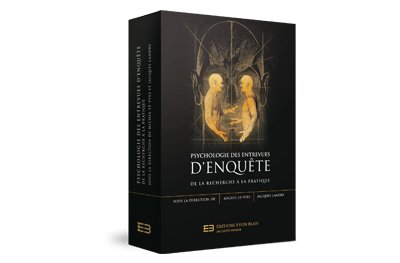
A book edited by Michel St-Yves and Jacques Landry, bringing together sixteen specialists from Quebec and France (in French). It links research and practice in four parts: interrogation and confession, interviews with witnesses and victims, lie detection, and legal and ethical issues.
For police officers, lawyers and criminologists · Thomson Reuters
Order from Thomson ReutersRadio and television interviews and articles published in Quebec and Europe. Interviews are in French.
 The lie detector, on André Arthur's show
 Interview with Benoît Dutrizac
 Szabo Award ceremony, April 23, 2015
 The polygraph, with Robert Pilot on 106.9 (Aug. 31, 2016)
What case law says about the value of polygraph evidence.
Can't find your answer? Call 514-895-3274.
The polygraph records breathing, cardiovascular activity and electrodermal activity while the person answers questions reviewed with them beforehand. The examiner analyzes these reactions. The test supports an investigation and is always paired with an interview.
In criminal matters, no: the Supreme Court excluded it in 1987 (R. v. Béland). In civil matters, the Quebec Court of Appeal leaves it to the trial judge to weigh its probative value. It is also used in administrative and insurance investigations.
Fees depend on the mandate: number of people, issues, location and type of report. You receive a quote after a first call.
Plan for half a day: pre-test interview, test and in-depth interview. The exact length is confirmed when you book.
No. The test relies on the examinee's free consent, obtained before the examination.
Yes. All services and training are offered in both English and French.
Describe your case in a few lines. All exchanges are handled confidentially.
514 895-3274Throughout Quebec · Services in English and French